If your muzzle is angled correctly and your horse is still experiencing rubs along the chin or jaw area, the cause is typically the halter, the muzzle, the muzzle strap, or a combination of all three. The best way to identify the source is to watch your horse graze and observe which part of the equipment makes contact with the area where the rub is occurring.
If you are unsure, email our customer support team for personalized guidance, support@gg-equine.com.
Below are a few recommended actions based on common rub locations:
Jaw Rubs
Jaw rubs are often caused by excess movement. Make sure the back buckle strap is snug and properly adjusted. We recommend fastening the back buckle to the noseband rather than the lead ring. Reducing movement from the muzzle and halter straps around the jaw can significantly decrease rubbing. Watch our video guide to learn how to address jaw rubbing caused by muzzles, halters, and straps.
Chin and Nose Rubs
Some hair loss or light callusing on the chin or nose can be normal. If the area becomes sore or irritated, adjustments should be made. Horses with more prominent noses or pointier chins may rub against the ventilation holes on the front or back of the muzzle. Muzzle Rub Protector Stickers can be applied to the muzzle panel to help prevent chafing.
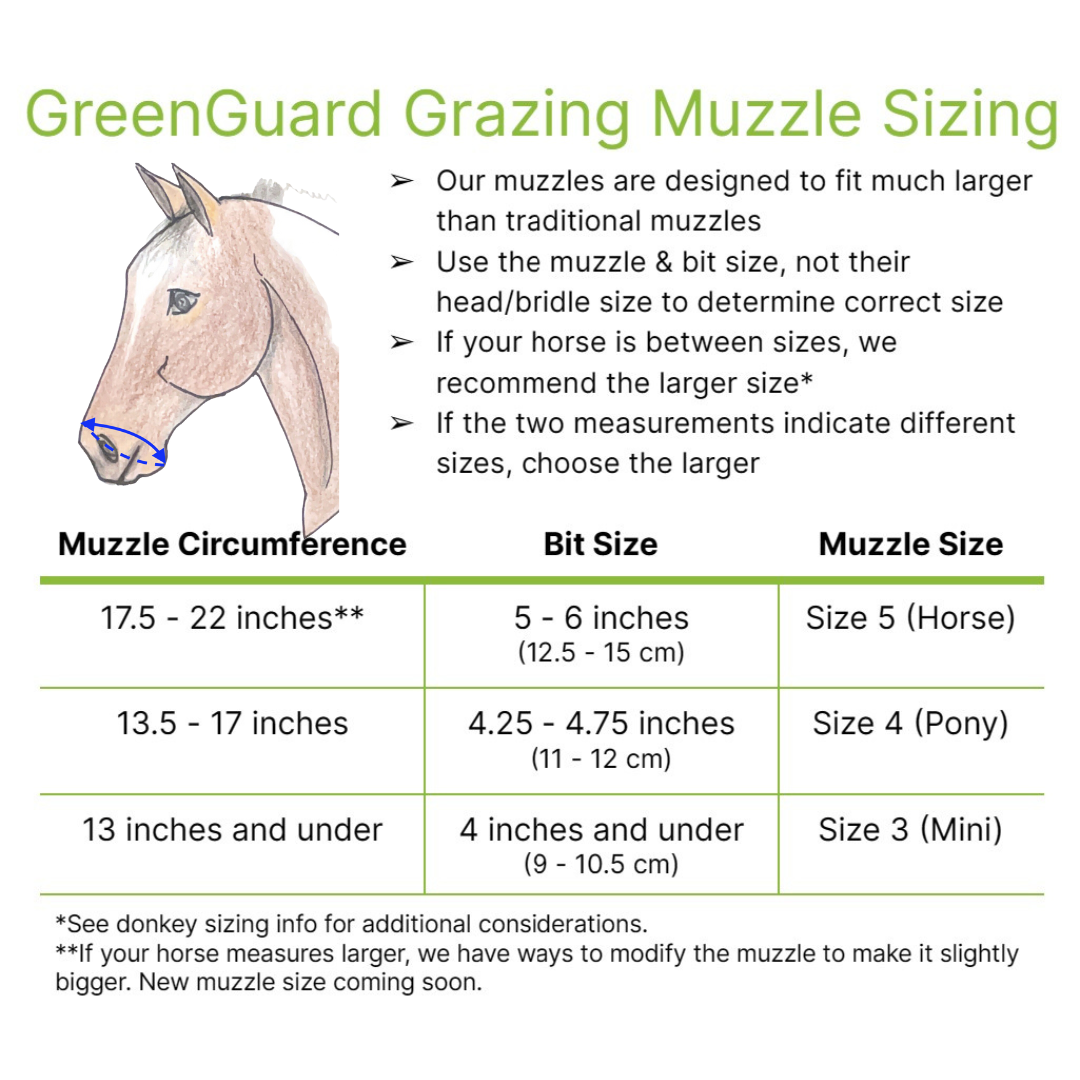
If you are using a Size 4 (Pony) muzzle and your horse is experiencing chin rubs, this often indicates that a Size 5 (Horse) muzzle may be a better fit. Additional DIY options or minor muzzle modifications can also help relieve pressure points.
Draft and Large Horse Rubs
If your horse is very large, a draft, or a draft cross, it may be too big for the largest standard muzzle size. If the muzzle is properly adjusted and rub protectors or tape have not resolved the issue, modifying the muzzle to allow more room may be an option for those comfortable with a DIY solution. Watch this step-by-step video on how to expand the muzzle for larger horses safely.
Halter Rubs
If your horse is experiencing halter rubs, we recommend adding halter padding. Memory foam or neoprene pads without fleece are preferred, as fleece can become abrasive over time. A lycra fly mask can also help protect sensitive areas. Some owners also use protective tape on halter contact points as a temporary solution. Watch this tutorial to see how you can use tape to prevent rubs.
For a complete guide on preventing and managing muzzle rubs, watch our complete tutorial.